
 Image 1 of 2
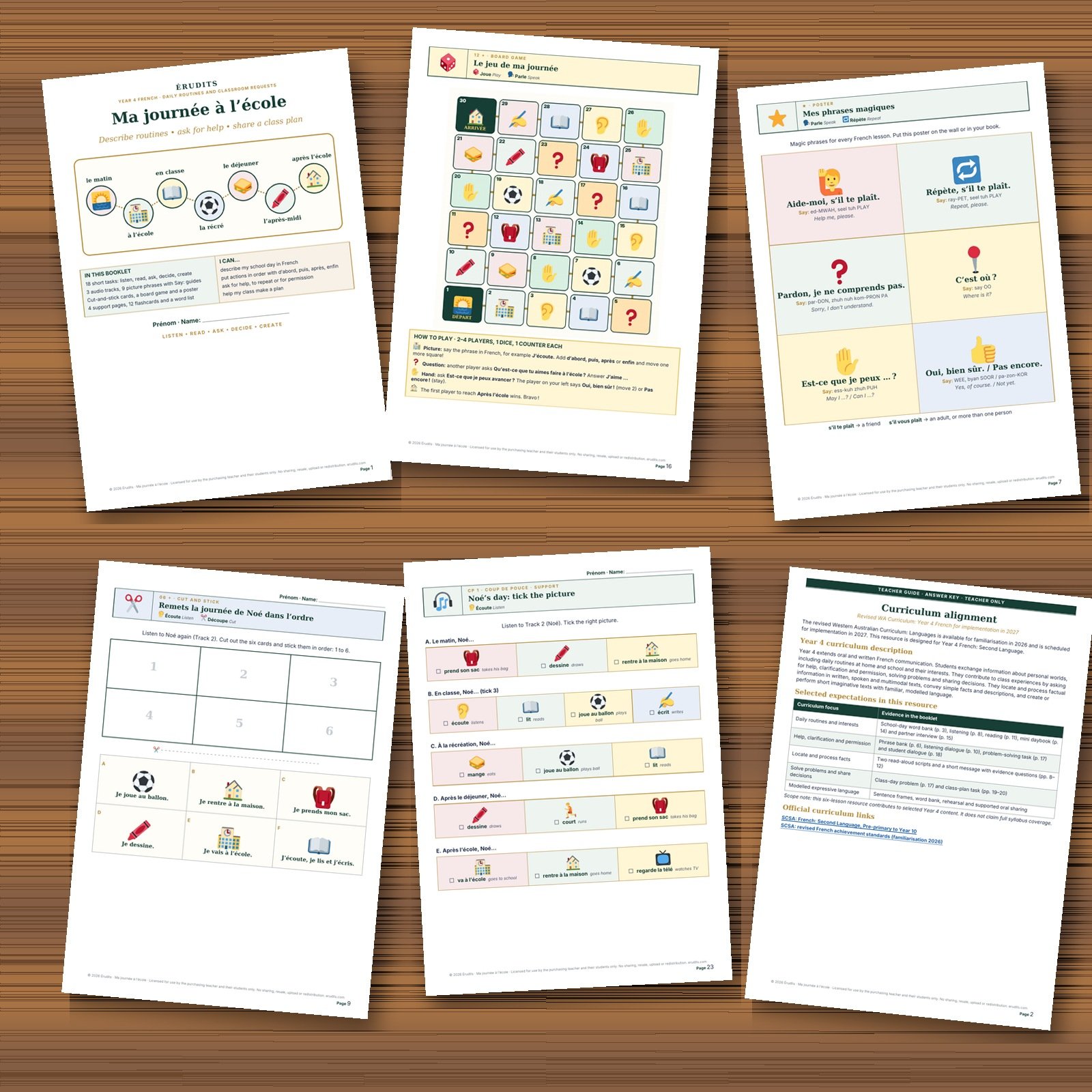 Image 2 of 2
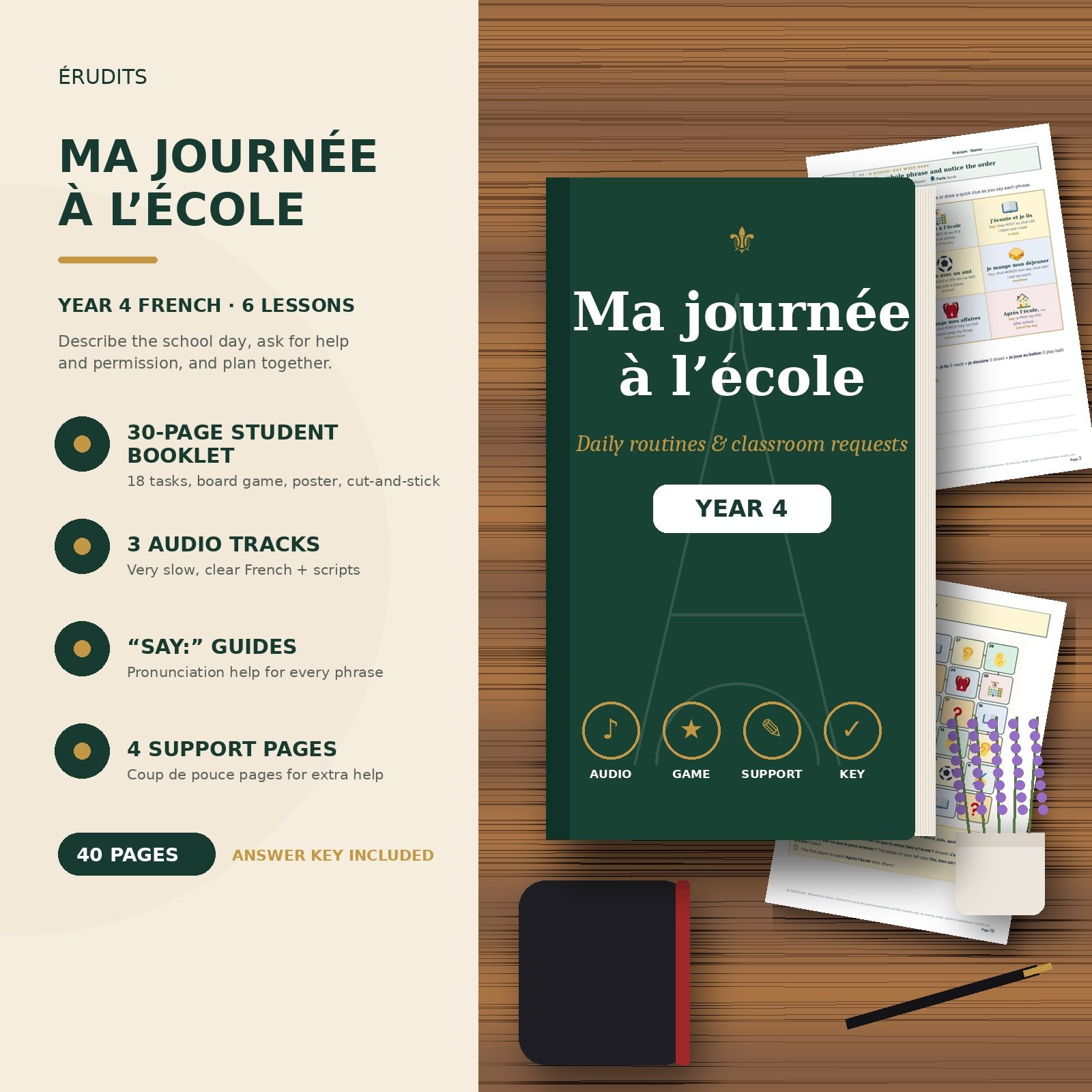
Help Year 4 learners describe their school day, ask for help and permission, and plan a class activity together. Ma journée à l'école is a 6-lesson unit written for Year 4 French: Second Language in the revised WA Curriculum (implementation 2027).
WHAT'S INCLUDED
Student booklet (30 pages, A4 PDF)
18 short tasks: listen, read, ask, decide, create
9 school-day phrases with pictures and "Say:" pronunciation guides
Sequence words: d'abord, puis, après, enfin
Two listening missions (Tracks 2–3, scripts also in the teacher guide)
Emma's message: a short reading with a useful-words box and detail questions
Partner interview, class-day problem, dialogue writing and a class plan to present
Hands-on extras: cut-and-stick sequencing cards, "Le jeu de ma journée" board game, "Mes phrases magiques" poster
4 "Coup de pouce" support pages for learners who need more help
Self-check, exit ticket, 12 flashcards and a word list with "Say:" guides
Teacher guide and answer key (10 pages, separate file)
WA Curriculum alignment page with SCSA links
Unit map with page numbers, teaching notes, language support
Audio track list, both scripts and full answer keys with marks
Assessment guide and pronunciation help for non-specialist teachers
3 MP3 audio tracks, recorded very slowly and clearly
STUDENTS WILL
describe a school day in simple French
put actions in order with d'abord, puis, après, enfin
say what they like and prefer
ask for help, repetition and permission (s'il te plaît / s'il vous plaît)
find details in a short listening and reading text
help plan a class activity and present it
GOOD TO KNOW
Print and go. Play the slow audio, or read the short scripts aloud yourself.
Audio is produced with text-to-speech voices.
Follows on from Ma classe et moi (introductions and classroom objects).
PDF + 3 MP3 files.
Picture credits: emoji graphics from Twemoji © Twitter, Inc. and other contributors, licensed under CC BY 4.0.
Licence: for use by the purchasing teacher and their students.
Questions? Email info@erudits.com